
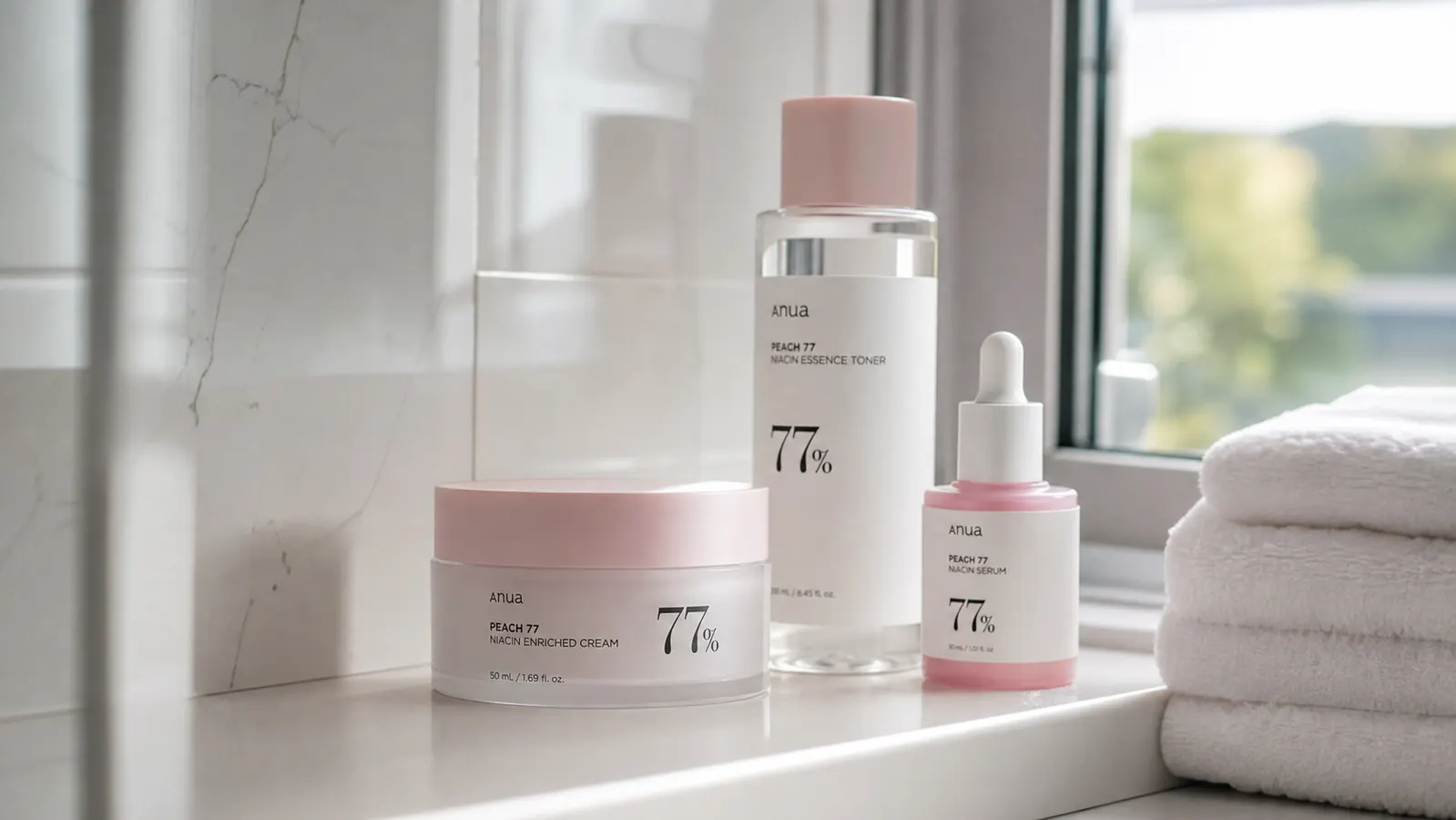
If your PDRN cream keeps pilling, you are not alone. I spent two weeks blaming the formula before I realized the problem was my layering order. One silicone-heavy serum applied too close in time, and the cream had nowhere to go. It rolled right off my face. Once I fixed the sequence, that same jar of Anua PDRN Hyaluronic Acid 100 Moisturizing Cream absorbed in about thirty seconds and my skin felt genuinely different by morning.
Pilling is the skincare equivalent of a wrong answer that sounds plausible. The cream is not broken. The ingredients are not incompatible. The issue is almost always about the order you apply things, how long you wait between steps, and whether you are creating the right surface for a cream to sit on. This guide walks through exactly how to fix that, step by step.
Your PDRN cream is only as good as the routine you put it in.
Anua PDRN Hyaluronic Acid 100 Moisturizing Cream is the lightweight, non-greasy formula this guide is built around. It is rated 4.4 stars from over 3,000 verified buyers and sits cleanly in a K-beauty layering routine once you know the sequence.
Amazon Check Today's Price on Amazon →Why PDRN Cream Specifically Needs the Right Layering Order
PDRN (polynucleotide) is a large molecule derived from salmon DNA. Its mechanism is repair-focused: it supports fibroblast activity, helps rebuild the extracellular matrix, and brings a deep hydration that sits differently on the skin than typical humectants. Because it works at a cellular level rather than just sitting on the surface, it needs to be placed in your routine at a point where the skin is prepped and receptive.
Creams in general go on after serums and essences because they are formulated to be occlusive, meaning they help seal in everything underneath. Apply a cream first and you are essentially putting a lid on an empty pot. Apply it last over a silicone-heavy primer or sunscreen and you will get pilling. The sequence matters for any cream, but with PDRN it matters slightly more because you want those polynucleotides working on hydrated, open skin, not fighting through a barrier you accidentally created.
Step 1: Double-Cleanse to Start With a Clean Surface
If you skip or rush the cleanse, everything else in your routine suffers. Any residual SPF, makeup, or silicone from your previous PM routine will prevent absorption at every step that follows. For a morning routine a single gentle cleanser is enough. For your evening routine, an oil cleanser followed by a water-based cleanser removes everything properly without stripping the skin barrier.
Pat your face dry with a clean towel rather than rubbing. Friction can temporarily disrupt your skin barrier, and PDRN is partly valued for its barrier-supporting properties. Start with as intact a surface as you can manage.
The Anua PDRN cream works well on sensitive skin types partly because it uses a lightweight gel-cream base instead of heavier emollients. That means you do not need a particularly stripped or raw surface for it to absorb. But a clean surface is still the baseline.
Step 2: Apply Your Toner While the Skin Is Still Slightly Damp
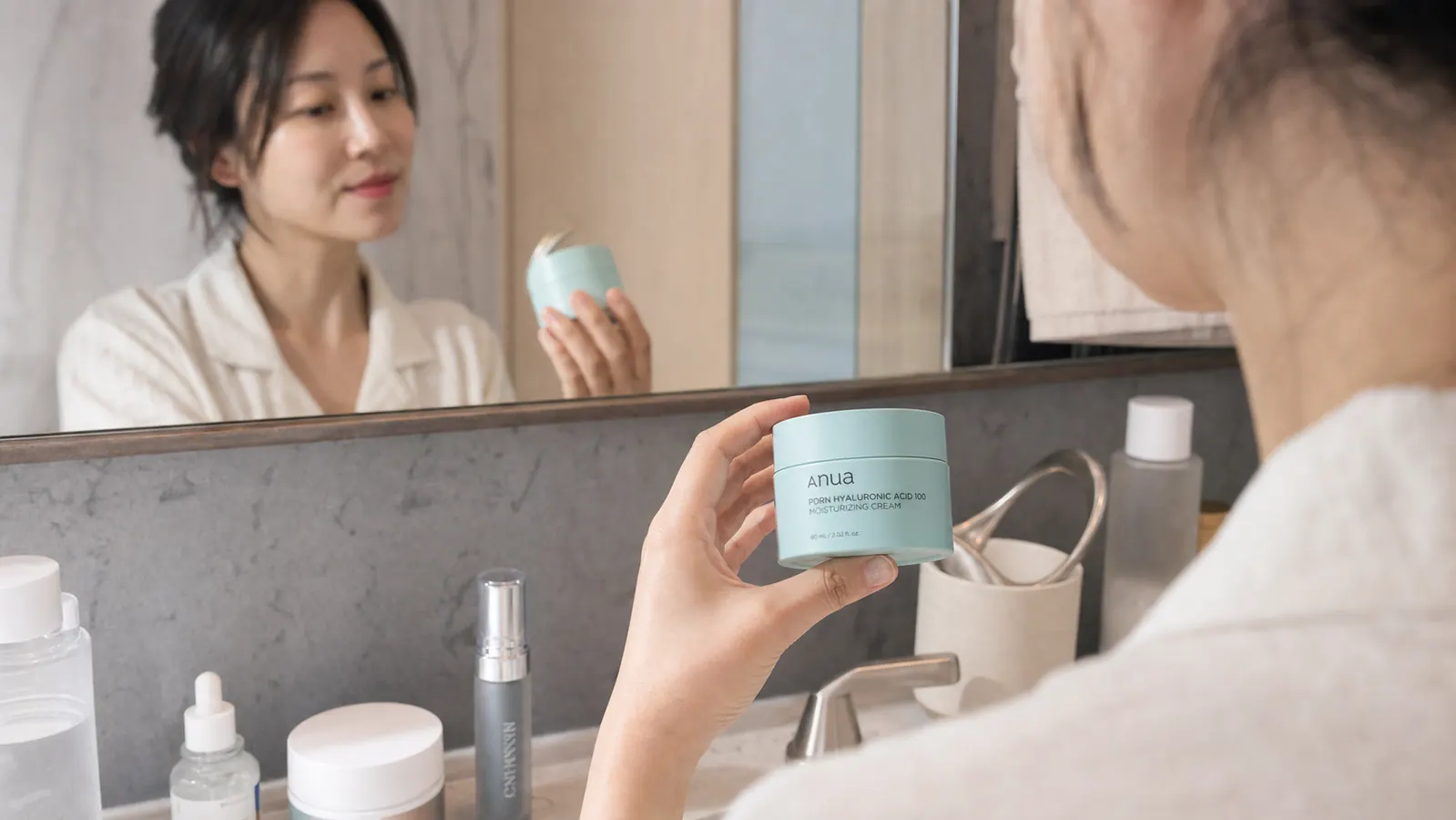
This is the step most people either skip or rush through, and it is one of the most important for pilling prevention. A hydrating toner applied to skin that is still faintly damp creates a charged, receptive surface that draws the next layers in rather than letting them sit on top.
I use a water-based hydrating toner with no alcohol, no exfoliating acids. Do not use an active toner (AHA, BHA, or niacinamide at high concentration) in this step if your serum already contains those actives. Layering high concentrations of the same acid can tip into irritation quickly, especially when you are also using a regenerative ingredient like PDRN that is working hard to repair tissue.
Pat the toner in gently and wait about twenty seconds. You should feel the skin surface shift from slightly tacky to more neutral. That is the signal to move forward.
Step 3: Add Essence or Serum, Thinnest Textures First
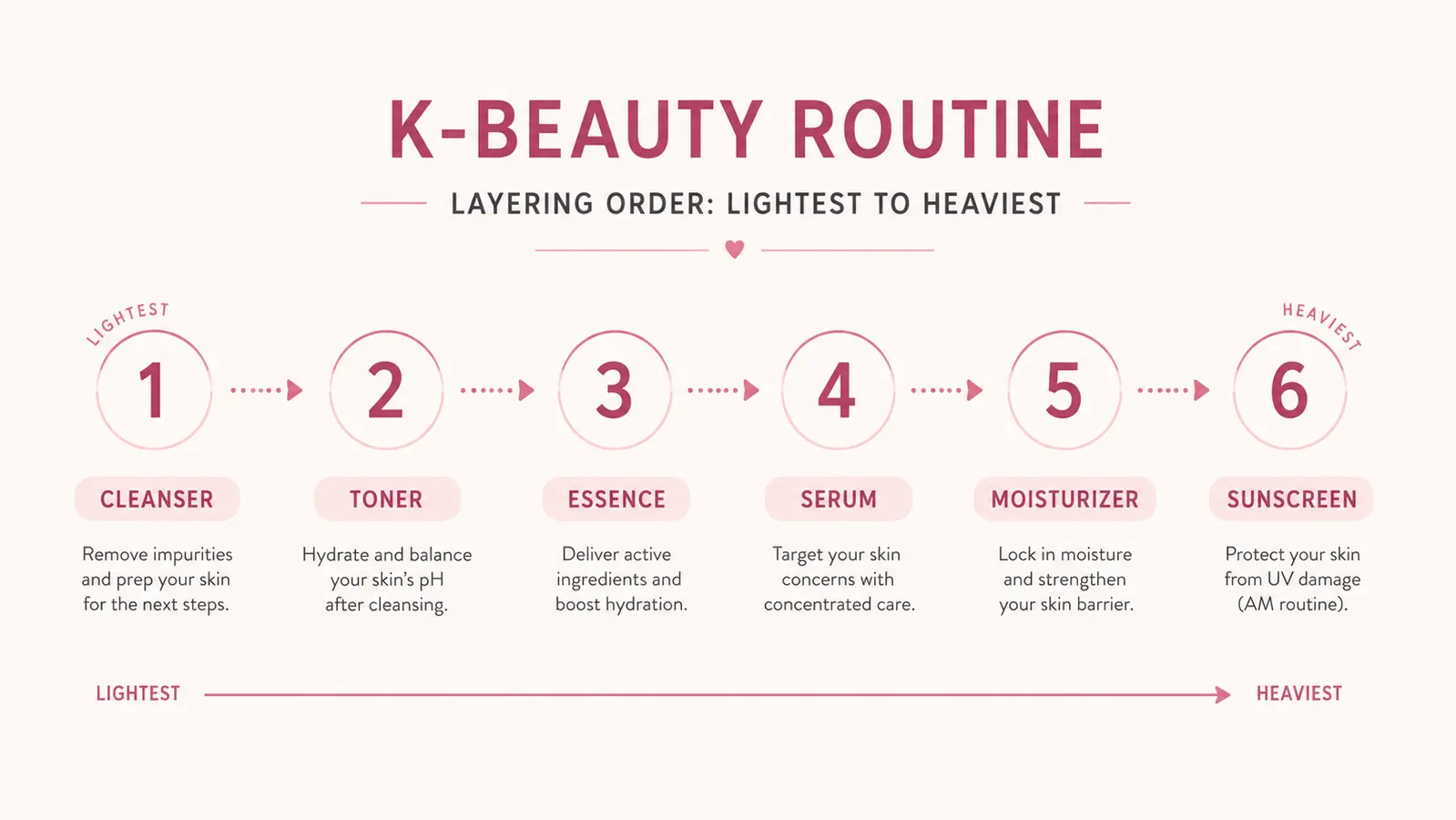
If you use a PDRN serum, a niacinamide serum, or a hyaluronic acid serum, this is where they go. The principle is simple: thinnest texture always goes before thicker. A watery essence goes before a serum. If you use two serums, the lighter-textured one goes first.
One combination that works extremely well with the Anua PDRN cream is the Medicube PDRN Pink Peptide Serum underneath it. The serum delivers a concentrated polynucleotide dose and the cream acts as a moisture-locking layer over the top. Because the serum is water-based and dries down clean, there is no pilling trigger between the two products. If you want more detail on building a PDRN serum routine specifically, the guide on how to use PDRN serum for glass skin covers that step in full.
Wait sixty seconds between your serum and your cream. Set a timer if you need to. That minute is usually the difference between a clean absorption and pilling. The serum needs to form a bond with the skin surface before you layer on top of it.
The serum needs to form a bond with the skin surface before you layer over it. One minute of waiting is usually the difference between clean absorption and pilling.
Step 4: Apply the PDRN Cream Using the Press-and-Warm Method
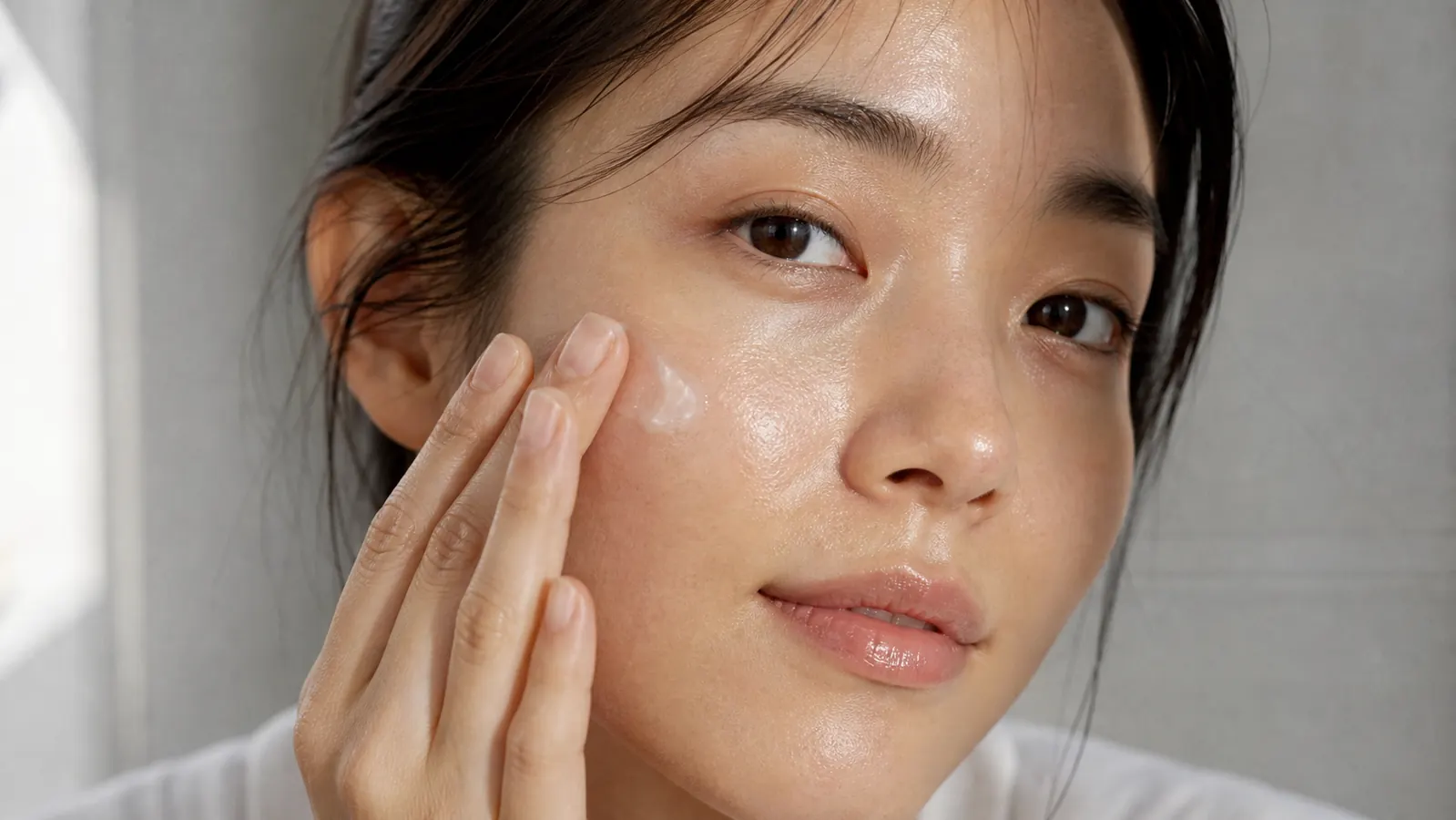
Take a pea-sized amount of Anua PDRN Hyaluronic Acid 100 Moisturizing Cream and dot it across your forehead, both cheeks, nose, and chin before doing anything else. This prevents you from dragging the cream across dry patches trying to distribute it after the fact.
Now use the press-and-warm method: press both palms lightly over your face to warm the cream against your skin for about five seconds, then gently pat it in. Do not rub or stretch the skin. Pressing and warming helps the gel-cream emulsify slightly and sink in more evenly. It also avoids the mechanical friction that contributes to pilling with certain formulas.
The Anua formula is described as non-greasy and lightweight, which is accurate. It absorbs into the skin without leaving a film, which makes it a genuinely good final cream step before SPF in your morning routine. In the evening, you can follow it with a sleeping mask if your skin tends toward very dry, but for most people it is sufficient on its own as the last step.
Step 5: Finish With SPF in the Morning, Nothing in the Evening
This is where a lot of people introduce a new pilling problem without realizing it. Some sunscreens, particularly those with silicone bases, will pill when applied over a cream that has not fully set. After applying the Anua cream, wait at least two to three minutes before your SPF. Longer is better if you have the time.
A water-based SPF or a mineral SPF without silicone as a primary ingredient will layer most cleanly over PDRN cream. If you are getting pilling specifically in this last step, the sunscreen formula is almost certainly the variable to change, not your cream.
In the evening, the Anua PDRN cream is your last step. Full stop. There is no reason to add another occlusive or oil on top unless you have a severely dry or compromised barrier. The polynucleotides need the overnight period to do their work. Adding more products on top does not help and may dilute the contact time with the skin.
AM vs PM: How the Routine Differs
Your morning routine and evening routine are not the same. In the morning, you are building a base: prepping, protecting, and locking in hydration before you face the day. In the evening, you are repairing. The Anua PDRN cream works in both directions, but your supporting cast changes.
Morning routine order: gentle cleanser, hydrating toner, lightweight essence or serum, Anua PDRN cream, SPF. That is the full sequence. Keep actives light in the morning. Save your stronger vitamin C, retinol, or exfoliating acids for evening when they can work without UV interaction.
Evening routine order: oil cleanser, water cleanser, hydrating toner, treatment serum (this is where you use your retinol or vitamin C if you have them), Anua PDRN cream. The cream goes on last. It seals and supports overnight. If you use a PDRN serum in your evening routine and want a deeper dive on the long-term results that approach delivers, the 10-week review of Anua PDRN Cream covers what changes week by week.
What Else Helps: Pairs That Work and Pairs to Avoid
PDRN plays well with most ingredients. It is not a particularly reactive active the way retinol or AHAs are. The combinations that work best underneath the Anua cream: hyaluronic acid serums (the shared HA theme means they reinforce each other's hydration), snail mucin (a complementary repair ingredient that layers beautifully before a PDRN cream), and ceramide-based essences (which support the barrier from below while PDRN supports it from above).
The combinations to be cautious about in the same routine step: direct acids (AHA or BHA) immediately before or after your PDRN cream, especially on sensitive skin. Not because they chemically conflict, but because you are asking your skin to handle a lot of active work at once, and PDRN is already doing a significant job. Separate them by step or by AM versus PM.
Also watch your vitamin C concentration. Low-concentration vitamin C derivatives (like ascorbyl glucoside or ethyl ascorbic acid) at 5 to 10 percent are fine under or before PDRN cream. Very high-concentration L-ascorbic acid serums at 15 to 20 percent are better reserved for a different routine step, or saved for alternate evenings.
The Most Common Pilling Mistakes (And How to Fix Each One)
Pilling mistake one: not waiting between steps. The fix is a sixty-second minimum between serum and cream, two to three minutes between cream and SPF. Set a timer the first few times until the habit is automatic.
Pilling mistake two: applying too much product. A pea-sized amount of Anua cream is genuinely enough for the full face. More product does not mean more benefit. It means more surface area for friction and pilling.
Pilling mistake three: using a silicone-heavy primer or sunscreen over the cream without waiting. This is the single most common cause of pilling in morning routines. Either switch to a water-based SPF or add a longer wait time.
Pilling mistake four: rubbing instead of pressing. Dragging product across skin that has already started to set will always create friction. Press and pat. The formula will do the rest.
You've got the routine. Now you need the right cream to put in it.
Anua PDRN Hyaluronic Acid 100 Moisturizing Cream is the product this guide is built around. Lightweight enough for mornings, reparative enough for nights, and formulated with PDRN plus three forms of hyaluronic acid for barrier support that actually shows up on skin over time.
Amazon Check Today's Price on Amazon →