
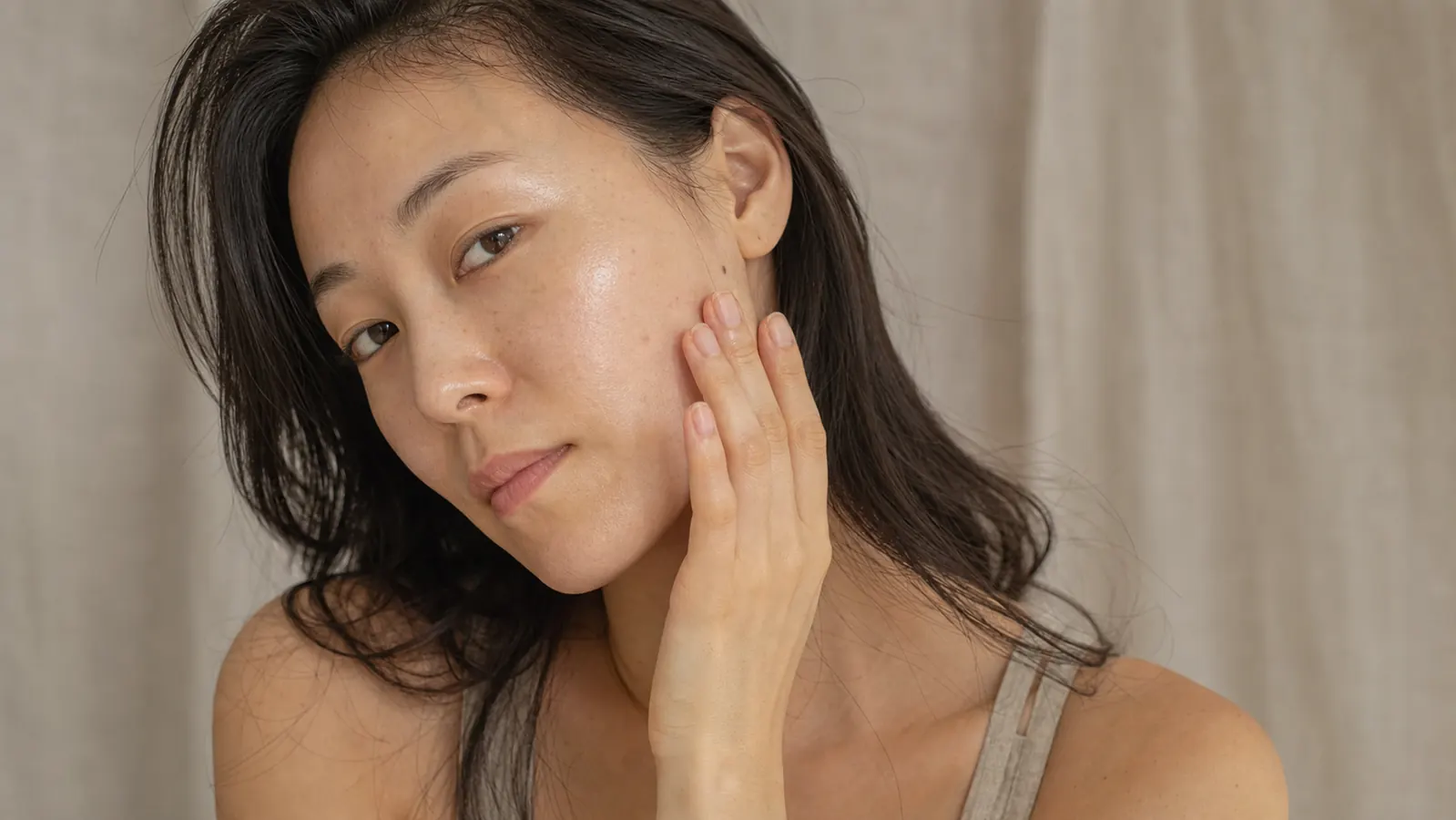
My skin has been in a years-long argument with itself. Combination at the surface, dehydrated underneath, and reactive enough that half the moisturizers I try leave me pink and irritated by morning. I have tried rich creams that sit on top like a film, watery gels that evaporate before I finish applying them, and everything in between. When I started seeing the Anua PDRN Hyaluronic Acid 100 Moisturizing Cream (ASIN B0DWFLY18Y) everywhere in my K-beauty feeds, I was curious but genuinely skeptical. Another moisturizer claiming to repair your barrier sounded like the same promise I had heard a dozen times before. I ordered a jar anyway and committed to using it every day for ten weeks, tracking how my skin responded week by week.
I am Sienna Park and I write about K-beauty ingredients with a particular fixation on skin barrier science. I read the ingredient list before I open the jar. My skin type: combination, chronically dehydrated, and prone to flushing at low-grade irritants like synthetic fragrance and high-concentration acids. That context matters for this review because this cream is specifically positioned for dehydration and sensitivity repair, and I am exactly the person it is targeting. If it could keep my skin calm and hydrated, it would be earning it.
The Quick Verdict
A genuinely lightweight barrier cream that layers cleanly, absorbs fast, and delivered measurable calm and hydration improvements over ten weeks. Not a rich, occlusive cream, and not a substitute for anti-aging actives. But for dehydrated, reactive skin that needs a stable moisturizer to build on, this one does the job honestly.
Amazon Check Today's Price →If your skin is drinking moisturizer and still asking for more by noon, this lightweight PDRN cream might be the barrier repair step it is missing.
The Anua PDRN Hyaluronic Acid 100 Moisturizing Cream has 4.4 stars from over 3,000 verified Amazon buyers. Worth checking the current price before the listing changes.
Amazon Check Today's Price on Amazon →How I Used It: 10 Weeks, One Product, Minimal Variables
I kept my routine deliberately simple during the test period. Gentle low-pH cleanser, an alcohol-free toner, and then the Anua PDRN cream as my only moisturizer, morning and evening. No actives on weeknights. No barrier-focused products layered on top that might muddy the results. I took weekly notes on hydration sensation, redness frequency, and whether my makeup was sitting smoothly or sliding and patching by midday.
Weeks one and two were a calibration period. My skin is always suspicious of new products and tends to react slightly before settling into a new routine. There was one morning of unusual dryness along my jaw that I suspect was my skin adjusting rather than a reaction to the formula itself. By week three that resolved completely and my skin was consistently more comfortable by midday than it had been in the two months before the test. I wore the same BB cushion throughout and noticed I needed to blot less by week four, which is not a small thing when you run combination and your T-zone usually needs touching up by lunch.
What Is Actually in This Cream and Why It Makes Sense for Sensitive Skin
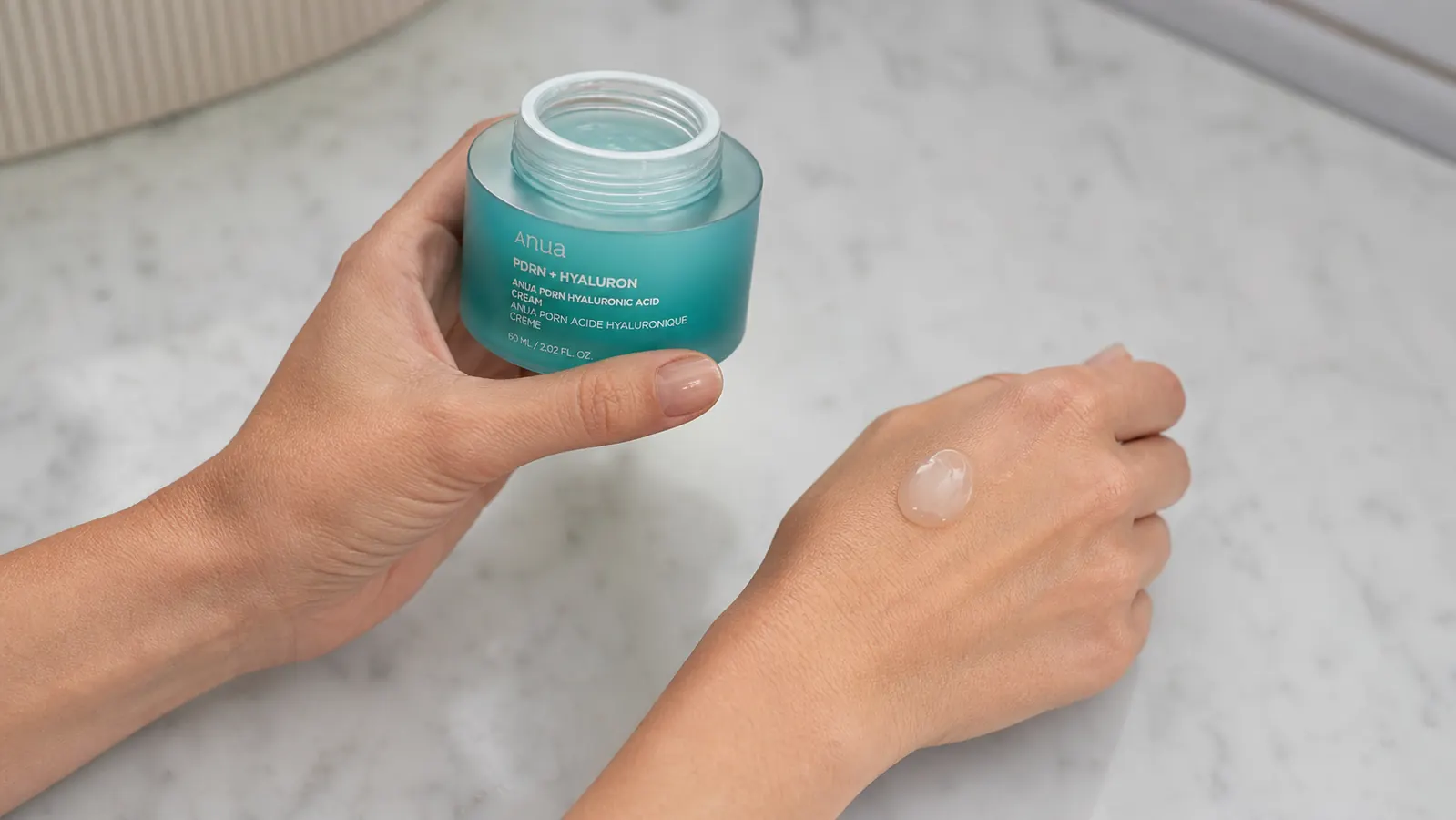
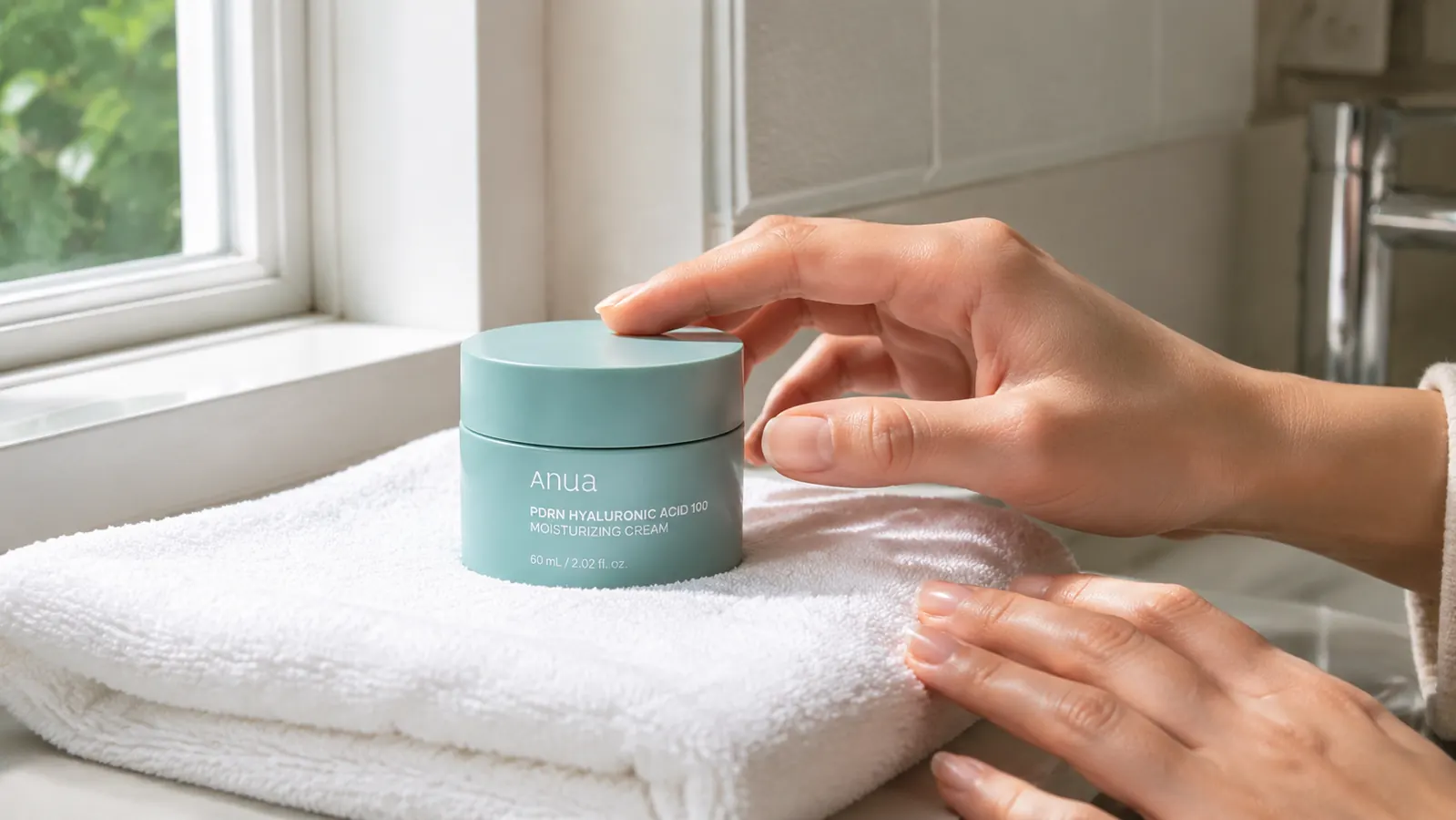
The full product name is the Anua PDRN Hyaluronic Acid 100 Moisturizing Cream, and both parts of that name carry real meaning. PDRN stands for polydeoxyribonucleotide, a polynucleotide fragment derived from salmon DNA that has been used in medical aesthetics for skin repair and regeneration for over two decades. The 'Hyaluronic Acid 100' signals that this formula uses 100 types or molecular weights of hyaluronic acid. You get surface-level humectancy from large molecules that sit on top and draw in atmospheric moisture, alongside smaller fragments that can penetrate more deeply. That layered HA approach is not just marketing language. Different HA sizes genuinely behave differently in the skin and together they hydrate across multiple depths simultaneously.
The formula is fragrance-free, which is a non-negotiable for my skin and the primary reason I was willing to test it seriously over a full ten weeks. Anua has built a reputation in the K-beauty community for keeping their formulas clean of common irritants, and this cream follows that pattern across the board. The texture is a gel-cream: not the heavy butter you might expect from a 'barrier cream' label, but not the barely-there consistency of a pure water gel either. It has just enough slip to spread easily, absorbs in roughly thirty seconds, and leaves a dewy rather than greasy finish that feels comfortable under SPF.
PDRN in topical cosmetics is still a relatively new ingredient category. Most of the rigorous clinical evidence for polynucleotides comes from injectable procedures used in aesthetic medicine clinics, but topical PDRN formulas are increasingly supported in dermatology literature for reducing surface inflammation, improving skin texture, and stimulating hyaluronic acid synthesis within the skin itself. Anua is not the only brand working with PDRN at an accessible price point, but the concentration in this particular formula sits on the higher end of what you will find outside a clinic-dispensed product.
By week five I stopped reaching for the facial mist I had been keeping on my desk to get through the afternoon. My skin was just holding its moisture better on its own.
Performance Over 10 Weeks: What Changed and What Did Not
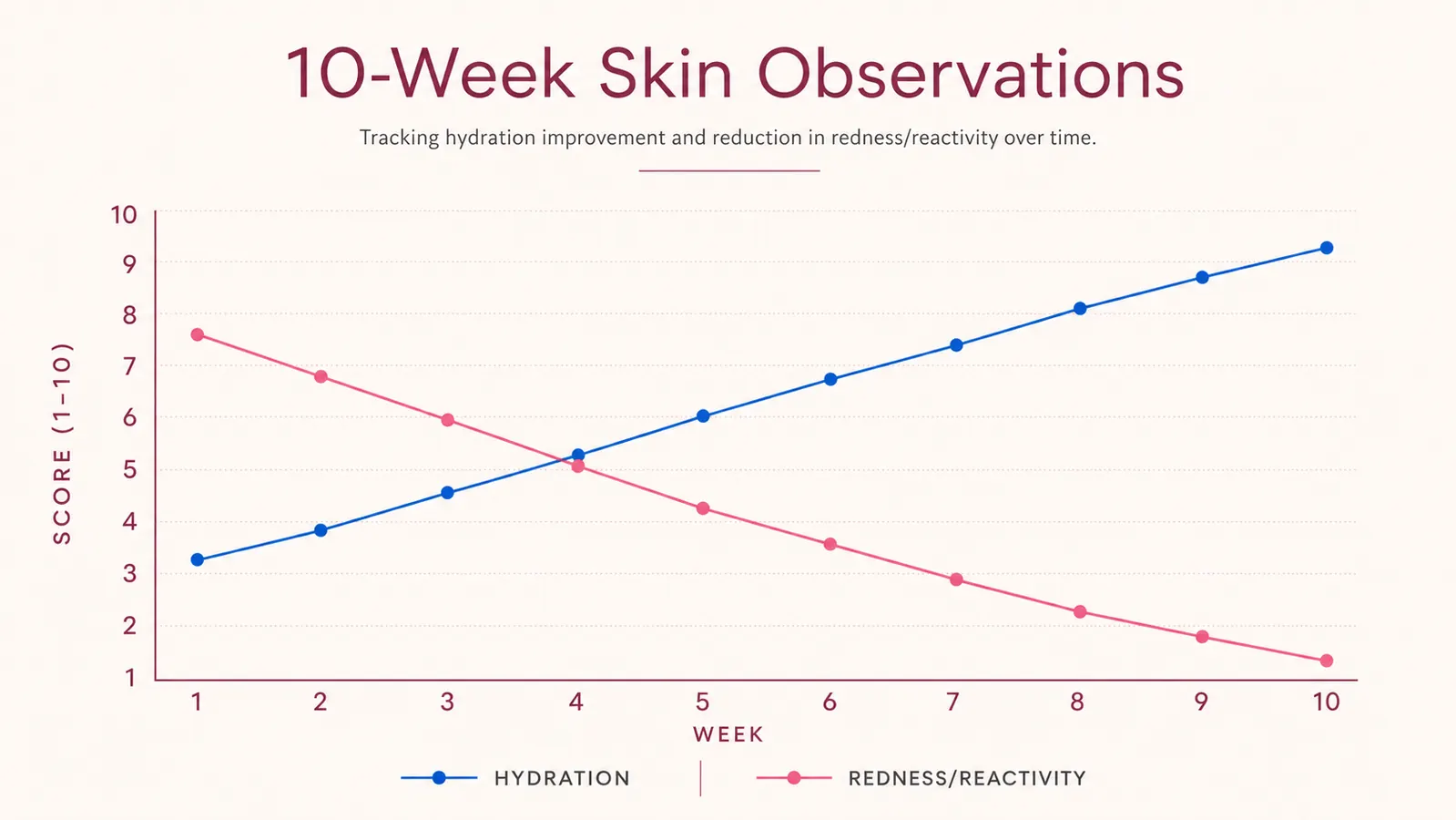
The change I noticed first was the reduction in what I call tight skin moments. That uncomfortable pulling sensation you get when your skin is depleted and trying to communicate it. In the first two weeks these happened regularly by mid-morning. By weeks five and six they were rare. By week eight they had essentially stopped. This was the most personally meaningful result, more than any visible change, because tight skin is my daily indicator that my barrier is struggling. When it stops, I know something is actually working.
Visible texture improvement was more gradual. I noticed my skin looking less dull around week three, which I attribute to the layered HA drawing in more consistent surface moisture. Around week six, the small rough patches I chronically develop along my cheekbones were noticeably smoother. These are areas where my skin tends to peel slightly in winter and I had been managing them with exfoliation for months before this test. They did not fully disappear, but the improvement was real and my foundation stopped catching on those spots, which is the practical test that matters most.
Redness was the area I monitored most carefully. My skin flushes easily and any product with a pH mismatch or trace of fragrance will usually show me within 72 hours. This cream produced zero reactive redness across ten weeks. That is a longer clean run than most products I have tested in this category. Whether that result comes from the PDRN's reported anti-inflammatory properties or simply from the absence of irritants in the base formula, I cannot say with scientific certainty. The outcome for my skin was the same either way.
What did not change: I saw no meaningful reduction in fine lines, no firming effect, and no improvement in pore appearance over the ten weeks. This is a hydration and barrier cream, not a replacement for a retinoid or a peptide-heavy treatment. I want to be direct about that because this product's actual job is to create the stable, calm foundation that lets your active ingredients work properly. It does that well. It is not doing the actives' job for them.
Texture, Layering, and How It Fits Into a Real Routine
The gel-cream texture is genuinely easy to work with in a multi-step routine. I used it under mineral SPF 50 in the morning and as the final step at night after serums, and it behaved consistently in both contexts. It did not pill under sunscreen, which is something I test deliberately because pilling tells you about ingredient compatibility issues before they become bigger problems. In the evening I occasionally added a few drops of a ceramide oil over the top as an occlusive sealant, and the two products layered cleanly without separation or balling.
The jar format does require hygiene discipline. You are dipping fingers into the product twice a day, which introduces bacteria over time. I switched to a small spatula after week one and recommend anyone else do the same from day one. A pump or tube format would be a meaningful improvement, and it is worth flagging as a practical consideration rather than a cosmetic one. The frosted glass jar looks elegant on a shelf but adds real weight to a travel bag and is genuinely fragile in a checked suitcase.
Per-use amount is economical. A pea-sized amount covered my full face, neck, and part of my decolletage. At that usage rate, a single jar works out to roughly two months of twice-daily use, which puts the cost-per-day in a range that is very reasonable for a K-beauty cream with an active PDRN payload.
What I Liked
- Lightweight gel-cream texture absorbs fast, no heavy residue, comfortable under SPF
- Fragrance-free formula with clean ingredient base, passed ten full weeks on reactive skin with zero flares
- Multi-weight hyaluronic acid provides surface and deeper hydration simultaneously
- PDRN has a legitimate scientific basis for barrier repair and anti-inflammatory support in the skin
- Roughly two months of twice-daily use per jar, excellent value for the category
- Layers cleanly under sunscreen and over water-based serums without pilling
Where It Falls Short
- Jar packaging requires a spatula to stay sanitary; a pump or tube version would be better
- No meaningful anti-aging actives such as retinoids or firming peptides included
- The first two weeks involve a skin adjustment period that can feel uncertain
- Dewy finish may feel too shiny for people who want a matte result under makeup
How It Compares to Other Lightweight Barrier Creams
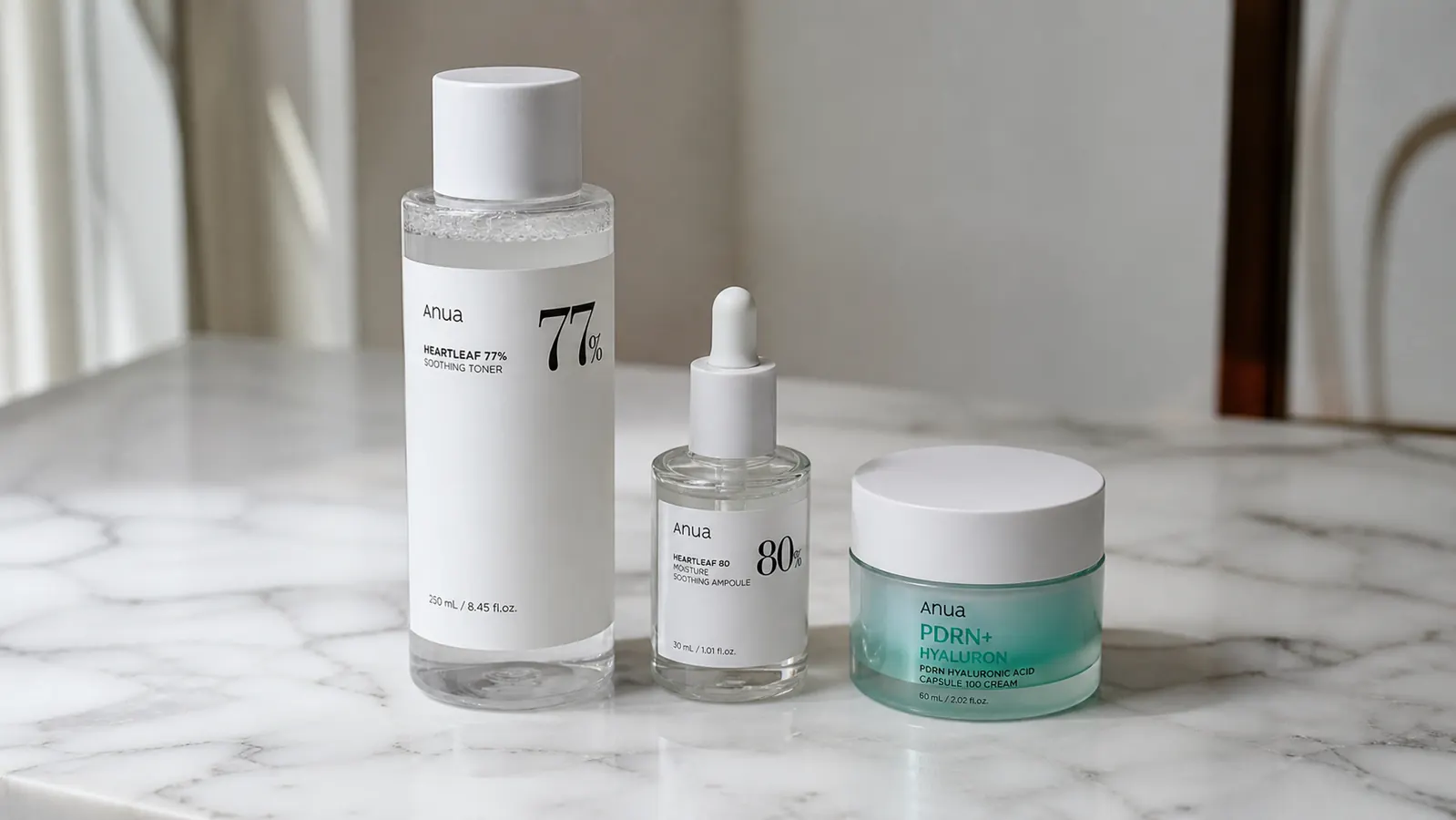
The most direct comparison in my experience is the VT Cosmetics PDRN Capsule Cream, which shares the polynucleotide angle but uses an encapsulated delivery mechanism and sits noticeably richer on the skin. If you run very dry rather than dehydrated, the VT formula may suit you better as a standalone. If you are combination or prone to congestion, Anua's lighter texture is the more forgiving choice. I cover those specific differences in my side-by-side comparison of these two PDRN creams.
Against non-PDRN barrier creams I have used, including CeraVe Moisturizing Cream, Dr. Jart Ceramidin Cream, and First Aid Beauty Ultra Repair, the Anua sits meaningfully lighter on the skin while providing comparable or better midday hydration retention. Whether the PDRN and multi-weight HA combination is doing additional work that single-molecule HA alone cannot do is genuinely difficult to isolate without a clinical study. But the results I observed suggest it. If you want to understand more specifically what distinguishes a PDRN moisturizer from a standard HA cream mechanically, I go into that in detail in my article on why PDRN creams outperform standard moisturizers for aging and sensitized skin.
Who This Is For
This cream is a strong fit if you have dehydrated or sensitized skin that reacts to fragrance, alcohol, or heavy occlusive formulas. It works particularly well if you want something light enough to use comfortably morning and evening without any feeling of congestion or heaviness. It suits people who are already running active ingredients like niacinamide, retinoids, or AHAs and need a calm, stable moisturizer layer that supports the barrier while actives do their work. It is also a practical entry point if you are curious about PDRN but not yet ready to invest in a higher-concentration serum or professional treatment.
Who Should Skip It
If your skin runs genuinely dry rather than dehydrated, this gel-cream will likely not feel substantial enough on its own and you may want to layer it under a richer cream or use a facial oil on top. If your primary concern is visible wrinkles, loss of firmness, or pigmentation, this product will not move the needle on those goals by itself. You will still need targeted actives. And if you have a known sensitivity to any ingredient in the formula, check the full INCI list before purchasing. The base is clean by most standards, but no single product is universal.
Ten weeks, zero reactive days, and skin that finally stopped demanding the midday mist. The Anua PDRN cream earned its spot.
Available on Amazon with over 3,000 customer reviews. Worth checking the current price if you have been searching for a fragrance-free, barrier-supportive moisturizer that is actually light enough to use every single day without issue.
Amazon Check Today's Price on Amazon →