
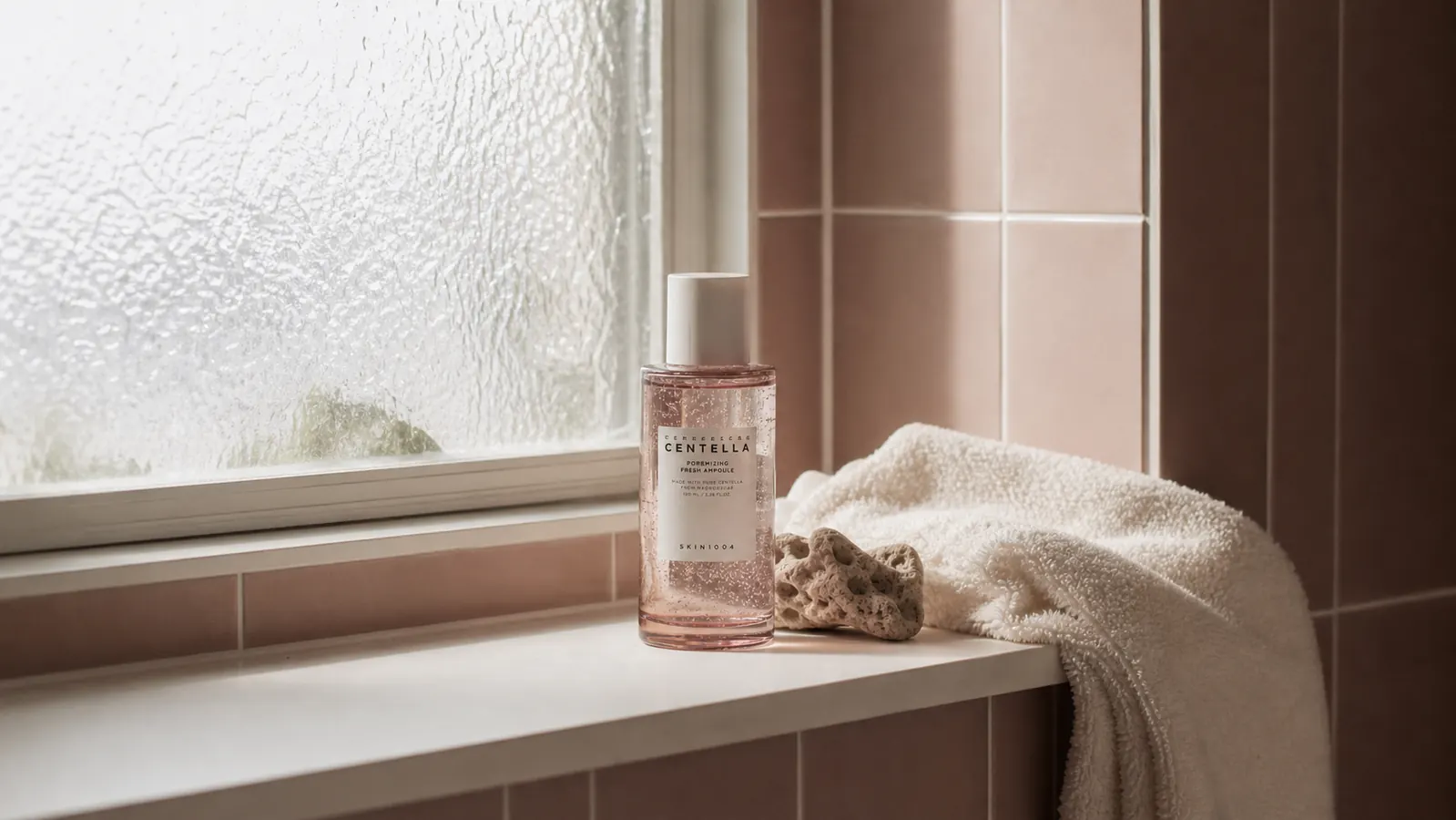
I started using the COSRX Snail Mucin 96% Repairing Serum in April 2025, right after I had gone too hard on actives and left my skin inflamed, tight, and peeling at the corners of my nose. My friend Joanna, who works in formulation QA in Seoul, told me to stop everything and just put this on twice a day for two weeks. I was skeptical. Snail mucin sounded like a punch line, not a treatment. Fourteen months later, I still have that bottle shape memorized because it is sitting on my bathroom counter right now. This is what I actually found.
Before I get into the detail, one honest framing note: I have also spent the last eight months testing PDRN serums, the polynucleotide-based K-beauty category that is getting all the skincare press right now. So I can tell you how snail mucin holds up in direct comparison to the newer generation of regenerative serums, not just in a vacuum. The short answer is that it holds up well, but for a different reason than the PDRN products.
The Quick Verdict
The most reliable, low-drama skin-repair serum at this price point. Not the most sophisticated formula on the market, but the one I keep coming back to when my barrier needs to recover.
Amazon Check Today's Price →If your skin is inflamed, reactive, or just done with actives, this is the serum to reach for first.
COSRX Snail Mucin 96% Repairing Serum has over 104,000 Amazon reviews and a 4.5-star rating. It is priced under $18 and ships Prime.
Amazon Check Today's Price on Amazon →How I Have Used It Over 14 Months
I am 34, Korean-American, combination skin that runs oily in the T-zone and dehydrated on my cheeks by mid-afternoon. I was using a retinol three nights a week and a glycolic toner every morning, which was clearly too much. My skin barrier was struggling, showing up as redness that would not calm down, tightness after washing my face, and a general sensitivity to things that had never bothered me before, like vitamin C serums and fragrance.
Joanna told me to run what she called a boring routine for two weeks: a gentle low-pH cleanser, the COSRX serum, and a simple moisturizer with no actives at all. I applied the snail mucin serum to slightly damp skin, two to three drops patted in gently, morning and night. By day four, the tight feeling after cleansing was gone. By day ten, the persistent redness around my nose had visibly calmed. I was not expecting it to work that fast.
After the initial two-week repair phase, I kept the serum as part of my permanent routine, adding my actives back in slowly and one at a time. I now use the COSRX serum every morning and on the nights I use retinol, where it acts as a buffer and seems to reduce the next-day dryness I used to get. Over 14 months I have gone through four bottles. The packaging is the same each time, pump applicator, frosted clear plastic, no drama.

What Is Actually in This Serum
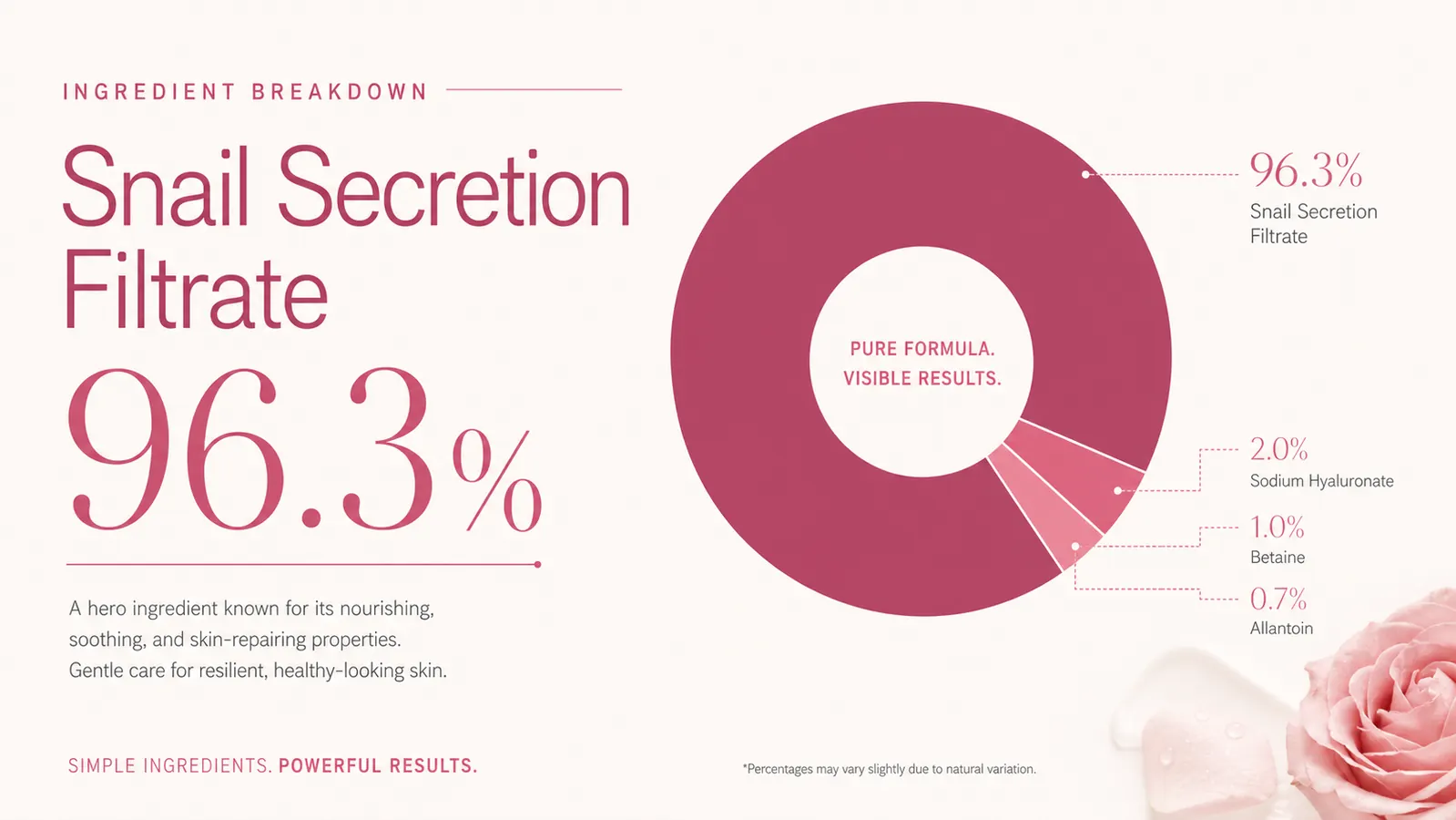
Snail secretion filtrate sits at 96.3% of the formula, which means the rest of the ingredient list is essentially water, humectants, and a few preservatives. There is no added fragrance, no alcohol, no acids, no actives that can irritate a compromised barrier. The texture is a slightly gel-like, clear fluid that is mildly viscous. It does not feel like mucus, despite the name. It feels like a lightweight serum with a slight slip to it.
Snail secretion filtrate is a complex mixture of proteins, glycoproteins, glycolic acid at very low levels, hyaluronic acid analogs, allantoin, and antimicrobial peptides. The concentrations of each are not disclosed. What the research does support is that snail secretion filtrate has wound-healing and barrier-repair properties, which tracks with my experience. The glycolic acid content is so low that it has no significant exfoliating effect, but it may contribute to surface-level cell communication.
What I appreciate about this formula is what is not in it. COSRX did not add actives that would compete with a barrier-recovery mission. The supporting cast includes sodium hyaluronate, betaine, and allantoin, all of which contribute to hydration and soothing. The formula is fragrance-free, which matters when you are dealing with reactive skin that treats synthetic scent as an irritant.
How Snail Mucin Compares to PDRN Serums
This is the question I get most often, and it is worth being direct about. PDRN serums, which use polynucleotide technology derived from salmon sperm DNA or plant-based analogs, work through a different biological pathway than snail mucin. PDRN is thought to support cell regeneration at a deeper level by binding to purinergic receptors and stimulating fibroblast activity. Snail mucin operates more at the barrier level, supporting the skin's ability to repair surface damage and maintain hydration.
In practical terms: if your skin is acutely reactive, barrier-compromised, or recovering from a procedure or over-exfoliation, snail mucin is the gentler, faster-acting option. If you are chasing longer-term regeneration goals like fine lines, skin density, or overall renewal, PDRN serums are doing something more targeted at that level. I currently use both in my routine, with COSRX in the morning and a PDRN serum every other night, and they do not conflict. They are not duplicates. They serve different phases of skin health.
When my skin was at its worst, retinoic-acid-damaged and angry, this was the only thing I put on it for two full weeks. It calmed down faster than anything else I had tried.
The price difference is also worth noting. COSRX Snail Mucin 96% runs under $18 for 96ml. The PDRN serums I tested ran between $18 and $30 for smaller volumes. For someone who wants to start repairing their barrier before investing in a PDRN routine, the COSRX serum is the logical first step. Fix the foundation, then layer in the regenerative ingredients.
Alternatives I Considered and Why I Kept Coming Back
Over 14 months I did try swapping this out twice to test other barrier serums. The first was a ceramide-forward serum from a Korean brand I trusted. It worked, but it felt heavier and less versatile, and I could not use it in the morning under SPF without looking slightly greasy. The second was a centella asiatica serum that was excellent for spot redness but did not give me the same baseline hydration I had come to rely on from the COSRX.
Both times I came back to the snail mucin within three or four weeks. The thing about this serum is that it does not ask anything of you. It has no opinion about what you layer on top. It does not require you to wait a certain number of minutes before applying the next product. It just absorbs and gets out of the way. That kind of cooperative behavior in a serum is genuinely rare, and I undervalued it until I tried products that did not have it.
Performance Over 14 Months: What Changed, What Did Not
Months one and two were the most dramatic. Barrier repair, redness reduction, a visible improvement in skin texture that I can only describe as smoother on the surface. Not glass-skin-level smooth, but the kind of smoothness that comes from a healthy moisture barrier rather than surface exfoliation.
Months three through six were about maintenance. My skin felt stable in a way it had not in a couple of years. I reintroduced retinol without the side effects I used to get. I added a vitamin C serum back in without irritation. The snail mucin in the morning seemed to act as a cushion that let me tolerate actives better.
Months seven through fourteen are harder to attribute to a single product because my routine had evolved. I added a PDRN serum, a new SPF, and a peptide moisturizer in that period. What I can say is that when I ran out of COSRX for ten days and did not reorder fast enough, my skin registered the absence. It felt more reactive and less plump in the mornings. That is the kind of real-world evidence I trust.
One thing that did not change: I did not see any significant improvement in fine lines or skin firmness that I could attribute specifically to this serum. For that kind of regenerative work, I needed the PDRN products. Snail mucin is not a wrinkle treatment. It is a repair and maintenance serum, and it is excellent at that specific job.

Texture, Application, and Sensory Experience
The serum is clear with a very slight yellow tint, gel-fluid in consistency, and absorbs in about 30 seconds on damp skin. It does not leave a sticky residue, though if you apply too much to dry skin it can pill under moisturizer. Two to three drops is the right amount for my face and neck. I apply it by patting, not rubbing, which helps it absorb evenly and minimizes the slight tackiness that some people notice.
It layers well under almost anything. I have used it under heavy ceramide moisturizers, lightweight SPF lotions, oil-based sleeping masks, and PDRN serums. The only time it pilled was when I applied it to completely dry skin on top of a glycerin-heavy toner and then layered a silicone-heavy sunscreen on top immediately. That is a layering error, not a formula flaw.
What I Liked
- 96.3% snail secretion filtrate is a genuinely high concentration with no ingredient window dressing
- Works fast on barrier damage, visible calming results within four days in my experience
- Fragrance-free and alcohol-free, safe for sensitive and reactive skin types
- Layers well under almost any moisturizer or SPF without pilling if applied correctly
- Under $18 for 96ml, one of the best cost-per-ml ratios in K-beauty repair serums
- Pairs easily with PDRN serums, peptides, and niacinamide without conflicts
- Over 104,000 Amazon reviews at 4.5 stars, which is real-world evidence at scale
Where It Falls Short
- No meaningful effect on fine lines or skin firmness, that is not what this formula is designed for
- Very mild and gentle, which is a feature for barrier repair but underwhelming if you want visible anti-aging action
- The gel texture can pill under heavy silicone products if you rush the layering
- Some people find the slight tacky feel after application off-putting, though it fades quickly
- No peptides or growth factors for regeneration beyond the surface level
Who This Is For
This serum is for anyone whose skin barrier is compromised from over-exfoliation, harsh products, hormonal shifts, or climate stress. It is for people who are new to K-beauty and want one reliable product they can use morning and night without thinking too hard about it. It is for people building a routine around PDRN actives who need a calming, non-competing layer. And it is for anyone who wants a genuinely high-concentration, single-hero-ingredient serum at an honest price point.
It also works well for people who are sensitive to fragranced or high-active serums and need something that will not introduce additional variables when their skin is already reacting. I recommend it specifically to people who are starting retinol for the first time and want a buffer serum that will make the adjustment period less aggressive.
Who Should Skip It
Skip it if your primary goal is visible anti-aging, skin tightening, or significant textural change from regeneration. This serum will not do that. For those goals, you need a PDRN serum with polynucleotide technology, or a retinol, or a combination of both. Snail mucin supports the foundation but does not build new structure. You can read the full comparison over at my COSRX vs PDRN serum breakdown if you are deciding between the two approaches.
Also skip it if you have a known allergy or sensitivity to mollusk-derived ingredients. That is uncommon but real. If you are vegan, the ingredient source is animal-derived, which means this product does not meet that standard. The PDRN serums from VT Cosmetics and others use plant-based or vegan PDRN as an alternative regenerative path.
And if you are already skin-stable with a strong barrier and are optimizing for something specific beyond repair, you may not notice much from this serum. It shines hardest when your skin needs calming, not when it is already thriving. If that describes you, the snail mucin listicle covering 10 reasons this ingredient still earns its place is worth a read before you decide.
Your skin barrier does not need another active. It needs this.
COSRX Snail Mucin 96% Repairing Serum is available on Amazon with over 104,000 reviews, Prime shipping, and a price that makes it one of the easiest K-beauty investments you can make. Check the current price before you decide.
Amazon Check Today's Price on Amazon →